








Copy Benchv1
21st Labs
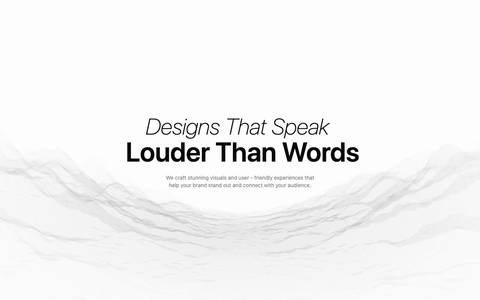
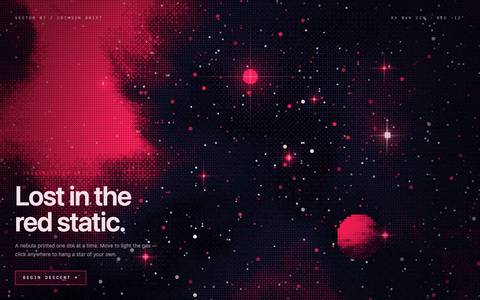
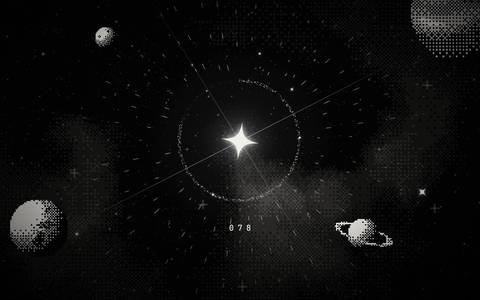
Copy Bench measures how well models rebuild complex web components from a screen recording. WebGL, shaders and multi-step interactive animations.
- models
- 16
- pages
- 50
- copies scored
- 1,600
Leaderboard
Every model gets two tries at each component. First it copies the recording without seeing its own result (one-shot). Then it opens its copy in a browser, compares it and fixes it (self-verified). The ranking and the score are the one-shot try; the light end of each bar is what checking in the browser added. 100 means you can't tell the copy from the original.
- One-shot
- 89.1
- Self-verified
- 92.4 (+3.4)
- Self-verify step
- $4.71, 14.7 min
- of the total
- One-shot
- 84.1
- Self-verified
- 88.4 (+4.3)
- Self-verify step
- $1.06, 7.9 min
- of the total
- One-shot
- 76.9
- Self-verified
- 86.7 (+9.8)
- Self-verify step
- $5.34, 11.1 min
- of the total
- One-shot
- 75.6
- Self-verified
- 82.2 (+6.6)
- Self-verify step
- $0.86, 10.5 min
- of the total
- One-shot
- 62.4
- Self-verified
- 69.0 (+6.6)
- Self-verify step
- $0.33, 1.1 min
- of the total
- One-shot
- 57.3
- Self-verified
- 64.5 (+7.1)
- Self-verify step
- $0.94, 4.6 min
- of the total
- One-shot
- 57.0
- Self-verified
- 67.2 (+10.2)
- Self-verify step
- $0.95*, 18.3 min
- of the total
- One-shot
- 50.1
- Self-verified
- 59.1 (+9.0)
- Self-verify step
- $0.18, 1.1 min
- of the total
- One-shot
- 45.4
- Self-verified
- 54.4 (+9.0)
- Self-verify step
- $0.52*, 10.3 min
- of the total
- One-shot
- 41.3
- Self-verified
- 51.9 (+10.6)
- Self-verify step
- $1.02*, 4.9 min
- of the total
- One-shot
- 41.2
- Self-verified
- 50.1 (+8.9)
- Self-verify step
- $1.98*, 8.3 min
- of the total
- One-shot
- 34.6
- Self-verified
- 46.6 (+12.0)
- Self-verify step
- $0.39*, 5.1 min
- of the total
- One-shot
- 33.3
- Self-verified
- 41.9 (+8.6)
- Self-verify step
- $0.37*, 16.3 min
- of the total
- One-shot
- 30.3
- Self-verified
- 39.2 (+8.9)
- Self-verify step
- $3.07, 8.7 min
- of the total
- One-shot
- 28.1
- Self-verified
- 35.8 (+7.6)
- Self-verify step
- $0.04, 30 s
- of the total
- One-shot
- 16.4
- Self-verified
- 18.9 (+2.6)
- Self-verify step
- $0.13*, 17.2 min
- of the total


Side by side
Each row starts with the original recording, then shows the copies playing in sync. Pick models to compare, or switch between the first try and the checked version.


Evaluation
Two AI judges from different labs grade every copy against the same checklist, and code turns their answers into the score. Copies that didn't come from the recording score zero, and our own hand scores check the judges.
A checklist instead of a gut score
The judges answer 26 checks in five groups and rate each one same, minor or major. Plain code does the math: a group starts at 100 and loses 15 points per minor difference and 40 per major one.
26 checks in five groups, weighted into one score.
- All text, same words
- All elements present
- Same counts
- Nothing extra
- Same block order
- Positions within 5%
- Sizes within 10%
- Alignment and overlap
- Nothing cut off
- Same things move
- Same kind of motion
- Path and distance
- Timing and speed
- Stagger and easing
- Reaction to input
- Canvas and shaders
- Background
- Accents
- Text and surfaces
- Gradients
- Light, dark and shadows
- Font family
- Weight
- Size within 10%
- Case and spacing
- Line breaks
Two judges, checked against people
GPT-6.1 Sol and Claude Opus 5.5 compare frames of the original and the copy, and we report their average. They come from two labs because a judge favors its own family: across all copies, the GPT judge scores GPT models 3.8 points higher than the Claude judge does. We also scored 249 copies by hand, and the judges' average matches ours at 0.84, closer than either judge alone.
Do the AI judges score like a human?
We scored 249 copies by hand, then had each AI judge score the same copies. A copy is one model's attempt to rebuild a component. Every number is an average score out of 100.
Both AI judges land within 6 points of the human score. The GPT judge tends to score a little higher than a human; the Claude judge stays closest.
Copies that didn't come from the recording
A score only counts if the model built the copy from what it saw. Models also recognize famous components: from a screenshot, one agent wrote "The screenshot looks like Magic UI's animated-list demo, so I matched it to that." So we dropped every component a model could name.
Pasted the original's code, early run
Given the live page instead of a video, Claude Opus 5.5 and Sonnet 5.5 pasted its source. So every model now gets only a recording.
Copies reused existing code
By Gemini 4 Carbon and MiniMax M3. One Gemini copy matched an open-source flocking simulation at 90% without fetching it.
Copies with no file
The agent never wrote its page, so there was nothing to score. A missing copy counts as zero.
Replayed pixels
No copy faked the motion with an embedded video or a flipbook of frames.
Insights
The browser helped most copies
Self-verifying raised the score on 507 of 799 copies, left 168 within 2 points and lowered 124.
How models did on each type of task
One-shot, the average model scores 64 on pages and scroll, but 46 on shaders and 41 on 3D. Only GPT-6.2 Astra, GPT-6.2 Sol and GPT-6 Astra stay above 80 in all five categories.
How close each model gets, by kind of component.
The text looks right. The motion doesn't.
The judges grade five things in every copy. Fonts and text score 79 on average. How things move scores just 39.
Average score out of 100, after checking in a browser
GPT models built their own way to check
GPT-6 Astra and GPT-6.1 Sol revised 9.9 and 7.6 times after the first draft; no other model passed 2.1.
Edits after the first draft, before the browser step
More time doesn't buy a better copy
Claude Fable 5.2 scored 69.0 in 2.6 minutes; Gemini 4 Carbon took 42.5 minutes for 67.2.
Minutes per copy, with the score under each bar
Copied or remembered?
Shown 10 tweaked famous components, Claude Opus 5.5 copied 90% of the visible changes, but wrote the original's value for 19 of 28 hidden ones.
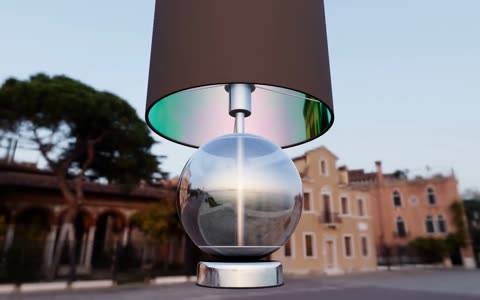
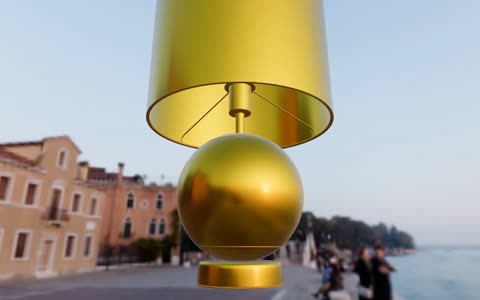
Take the lamp from the three.js iridescence example: we made it gold and sped up its orbit 4x, and from a screenshot Opus still wrote the original's exact spin speed.